THE PREP COUNTER
How to Slice Tri-Tip Against the Grain (Without Ruining It)
Tri-tip has two grain directions that meet near the middle. Here is how to find them, where to split the roast, and how to slice it thin and tender.
The short answer
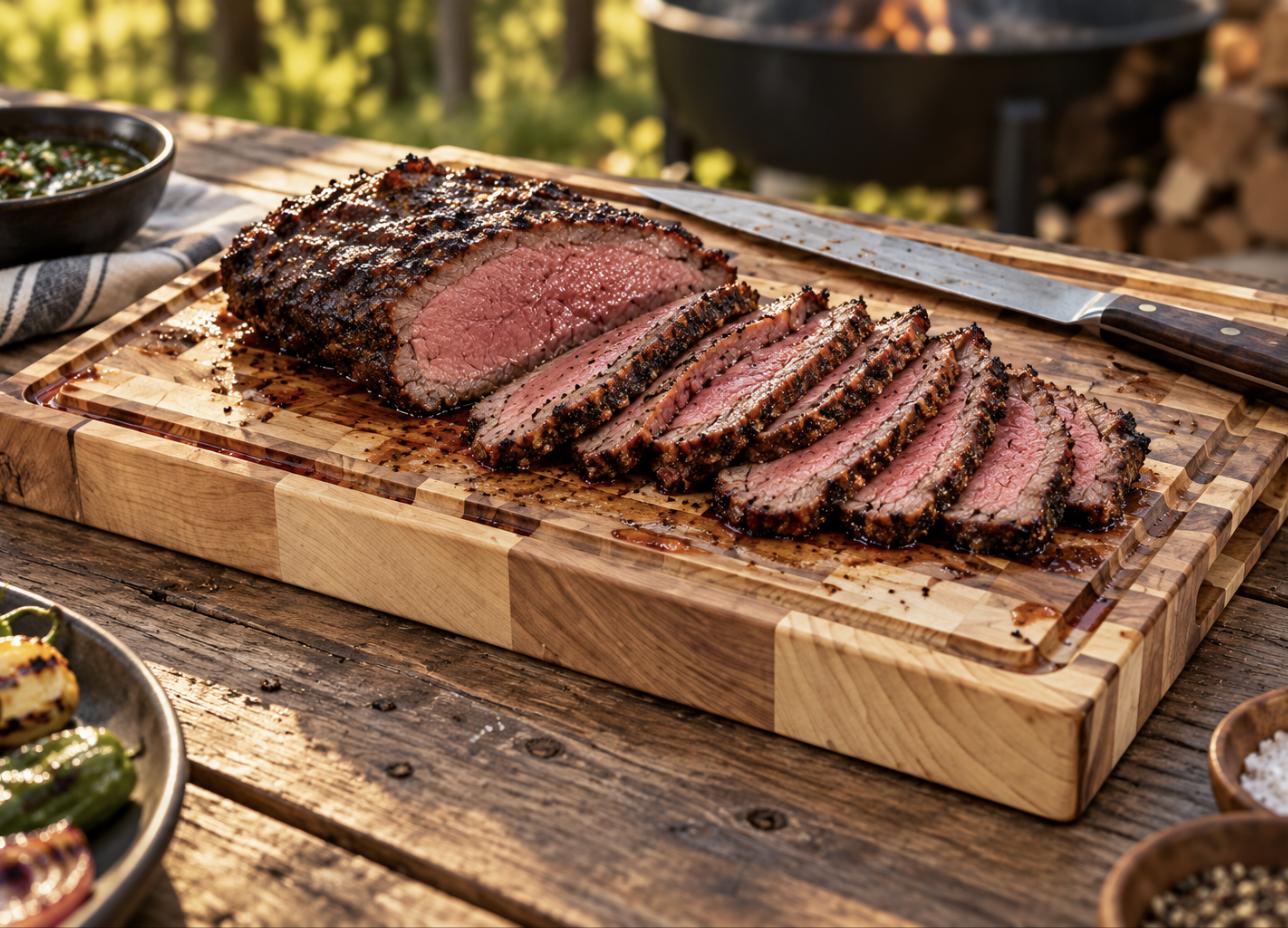
To slice tri-tip against the grain, first find where its two grain directions meet, usually near the bend in the middle of the roast. Cut the tri-tip in two at that point. Then turn each piece so the muscle fibers run left to right and slice straight across them into thin pieces, about ¼ inch thick.
Tri-tip is easy to cook and easy to ruin at the board. Because the grain changes direction, one long row of slices will cut half the roast with the grain, and those slices come out chewy.
Why does slicing against the grain matter?
Meat is made of long muscle fibers bundled together. When you slice with the grain, each slice keeps those long fibers intact, and you end up chewing through them. When you slice against the grain, you cut the fibers into short lengths, so each bite feels more tender.
This matters more on tri-tip than on many cuts because it is a fairly lean, hard-working muscle from the bottom sirloin.
How do you find the grain on a tri-tip?
Tri-tip is shaped like a boomerang. Two sets of muscle fibers run at different angles and meet near the bend:
- The long, narrow end has fibers running roughly along its length.
- The wider, fan-shaped end has fibers that spread out at an angle to the first section.
Look for these lines before you cook. Raw meat shows the grain more clearly than a crusty, smoked roast. Some cooks cut a small notch in the narrow end so they remember which way to slice. After cooking, wipe away a little of the bark in a couple of spots if you need to see the lines again.
How do you slice a cooked tri-tip step by step?
- Rest it. Let the tri-tip rest for about 10 minutes after cooking so the juices settle. The USDA's safe minimum internal temperature for beef roasts is 145°F with a 3-minute rest.
- Set up a big board. Use a board large enough to hold the whole roast plus the slices. A juice groove helps, because tri-tip releases a lot of liquid. Put a damp towel under the board so it does not slide.
- Find the split. Locate where the two grain directions meet, usually at the bend.
- Cut the roast in two. Slice straight through at that point so you have a long piece and a wide piece.
- Turn the first piece. Rotate it so the fibers run horizontally in front of you.
- Slice across. Cut straight down across the fibers in slices about ¼ inch thick, using long, smooth strokes.
- Repeat with the second piece, turning it to match its own grain.
What knife works best?
A long slicing knife or a carving knife with a 10- to 12-inch blade is ideal, because it lets you cut each slice in one or two strokes. A sharp chef's knife also works. Whatever you use, it should be sharp. A dull blade tears the crust and squeezes out juice. Avoid sawing back and forth with short strokes.
How thick should tri-tip slices be?
| Serving style | Slice thickness | Why |
|---|---|---|
| Plated dinner | About ¼ inch | Tender bite, holds its juice |
| Sandwiches | ⅛ inch or thinner | Easier to bite through in bread |
| Steak-style portions | ½ inch | Looks like a steak, needs a sharp knife at the table |
The thinner you slice, the more forgiving tri-tip becomes if it cooked a little past your target temperature.
What cutting board should you use for tri-tip?
Choose a board about 17 inches long or larger so you can split and slice without crowding. A thick hardwood board stays put while you carve and is easy on a long slicing knife. A deep juice groove keeps liquid off the counter. For more on choosing a carving surface, see our guide to carving boards vs maple cutting boards and our breakdown of the best maple cutting board for meat.
Keep a separate board for raw meat. Cooked tri-tip should go on a clean board, not the one you used to trim or season it.
What are the most common tri-tip slicing mistakes?
- Slicing in one long row. This cuts half the roast with the grain.
- Slicing right off the grill. Juices run out onto the board instead of staying in the meat.
- Using a short knife. Short strokes shred the bark and the surface.
- Cutting on a small board. Slices end up stacked or on the counter.
- Slicing too thick. Thick slices make chewy fibers more noticeable.
Best for
- Long slicing or carving knife (10 to 12 inches): clean slices in one or two strokes.
- Sharp chef's knife: a fine backup if you do not own a slicer.
- About ¼ inch slices: plated dinners.
- ⅛ inch or thinner: sandwiches.
- ½ inch slices: steak-style portions.
Frequently Asked Questions
Which way do you slice tri-tip?
Slice tri-tip across the grain. Split the roast where the two grain directions meet, then slice each piece across its own fibers.
Where do you cut tri-tip in half?
Cut it at the bend in the middle, where the long, narrow section meets the wider, fan-shaped section. That is usually where the grain changes direction.
How long should tri-tip rest before slicing?
About 10 minutes is enough for most tri-tips. Tent it loosely with foil if you want to keep it warm.
Why is my tri-tip tough even after resting?
The most common reason is slicing with the grain. Overcooking a lean cut like tri-tip also makes it tougher.
Can you slice tri-tip ahead of time?
You can, but it dries out faster once sliced. For the juiciest results, slice it just before serving and slice only what you need.
What should you do next?
- Before cooking, look at the raw tri-tip and notch the narrow end to mark the grain.
- Rest the cooked roast for about 10 minutes.
- Set up a board about 17 inches long or larger on a damp towel.
- Split the roast at the bend, then slice each piece across its own grain.
- For more on board size, grooves and stability, read best cutting board for carving meat.
How this guide was put together
The Cutting Board Guide team writes and fact-checks every guide on The Cutting Board Guide. Comparisons are based on maker specifications, published standards and food-safety guidance from sources such as the USDA, and each guide is reviewed and updated when specs or prices change. More about us.